
Role of NHIS in Shaping Responsible Citizens

The Role of NHIS in Shaping Responsible Citizens
In today’s rapidly changing world, the role of a school extends far beyond textbooks, examinations, and academic achievements. Schools are important spaces where children learn the values, attitudes, skills, and responsibilities that shape them into confident and responsible citizens.
“Education is not only about preparing children for a career; it is about preparing them to become responsible human beings and active contributors to society.”
At New Hardwick Indian School (NHIS), CBSE, Magadi Road, Bengaluru, education is viewed as a holistic journey that nurtures not only academic potential but also character, compassion, discipline, creativity, social responsibility, and respect for others.

What Does It Mean to Be a Responsible Citizen?
A responsible citizen understands that individual actions have an impact on the wider community. Responsibility begins with simple values—respecting others, following rules, caring for the environment, helping those in need, being honest, and understanding one's duties towards society.
For children, these values are developed gradually through everyday experiences at home, in school, and in the community.
A responsible citizen learns to:
Respect people from different backgrounds and perspectives
Follow rules and understand their importance
Take responsibility for personal actions
Care for the environment and public spaces
Show empathy and kindness towards others
Participate positively in community activities
Understand rights along with responsibilities
Make ethical and informed decisions
Contribute constructively to society
Schools play a significant role in helping students develop these qualities from an early age.
How Schools Shape Responsible Citizens
1. Building Strong Moral Values
Character education is an essential part of a child's development. Values such as honesty, integrity, kindness, respect, empathy, and responsibility help children understand how their choices affect others.
At NHIS, the school environment can become a foundation where students learn that success is not measured only by marks but also by the values they demonstrate in everyday life.
2. Encouraging Respect and Inclusivity
Modern society brings together people with different cultures, languages, beliefs, backgrounds, and perspectives. Children need to learn how to appreciate these differences while treating everyone with dignity and respect.
A diverse school environment provides opportunities for students to develop empathy, cooperation, communication, and mutual understanding—important qualities for responsible citizenship.
3. Developing Environmental Responsibility
Environmental awareness should begin during childhood. Schools can encourage students to understand the importance of conserving natural resources and protecting the planet.
Activities such as plantation drives, waste-management initiatives, cleanliness campaigns, water conservation awareness, and nature-based learning can help children understand that protecting the environment is everyone's responsibility.
When a child learns to switch off unnecessary lights, avoid wasting water, keep surroundings clean, or care for a plant, they are already taking their first steps towards environmental citizenship.
4. Teaching the Importance of Discipline
Discipline is not simply about following instructions. It is about developing self-control, consistency, accountability, and respect for others.
Arriving on time, completing responsibilities, following school rules, maintaining cleanliness, respecting teachers and classmates, and working cooperatively help students develop habits that remain valuable throughout life.
5. Encouraging Community Participation
Responsible citizens understand that communities become stronger when individuals contribute positively.
Schools can introduce students to community-oriented activities and social initiatives that allow them to understand real-world challenges. Such experiences encourage children to move beyond individual achievement and recognise the importance of collective wellbeing.
6. Developing Critical Thinking and Decision-Making
A responsible citizen should be able to think independently, evaluate information, ask meaningful questions, and make informed decisions.
Education should therefore encourage students to analyse situations rather than simply memorise information. Discussions, projects, debates, collaborative activities, problem-solving exercises, and experiential learning can help students develop critical-thinking abilities.
These skills are particularly important in an age where children are exposed to enormous amounts of information through digital platforms and social media.
7. Promoting Empathy and Compassion
Academic knowledge can help a student build a career, but empathy helps build a better society.
Children who learn to understand another person's feelings and circumstances are more likely to become compassionate individuals. Encouraging students to help classmates, care for others, respect support staff, and participate in community initiatives can strengthen their sense of empathy.
8. Preparing Students for Digital Citizenship
Today's children are growing up in a digitally connected world. Responsible citizenship therefore also includes responsible digital behaviour.
Schools and parents can guide students about:
Using social media responsibly
Respecting online privacy
Avoiding cyberbullying
Identifying misinformation
Communicating respectfully online
Protecting personal information
Using technology productively
Digital literacy combined with ethical awareness helps students become responsible citizens both offline and online.
The Role of Teachers in Building Responsible Citizens
Teachers are among the most influential role models in a child's life. Students often learn values not only from what teachers teach but also from how teachers behave.
A teacher who demonstrates fairness, patience, respect, responsibility, and compassion provides children with a practical example of good citizenship.
At NHIS, educators can play an important role in creating a classroom culture where students are encouraged to express their ideas, listen to others, collaborate, accept responsibility, and learn from mistakes.
Learning Beyond the Classroom
Some of the most meaningful lessons cannot be found in textbooks.
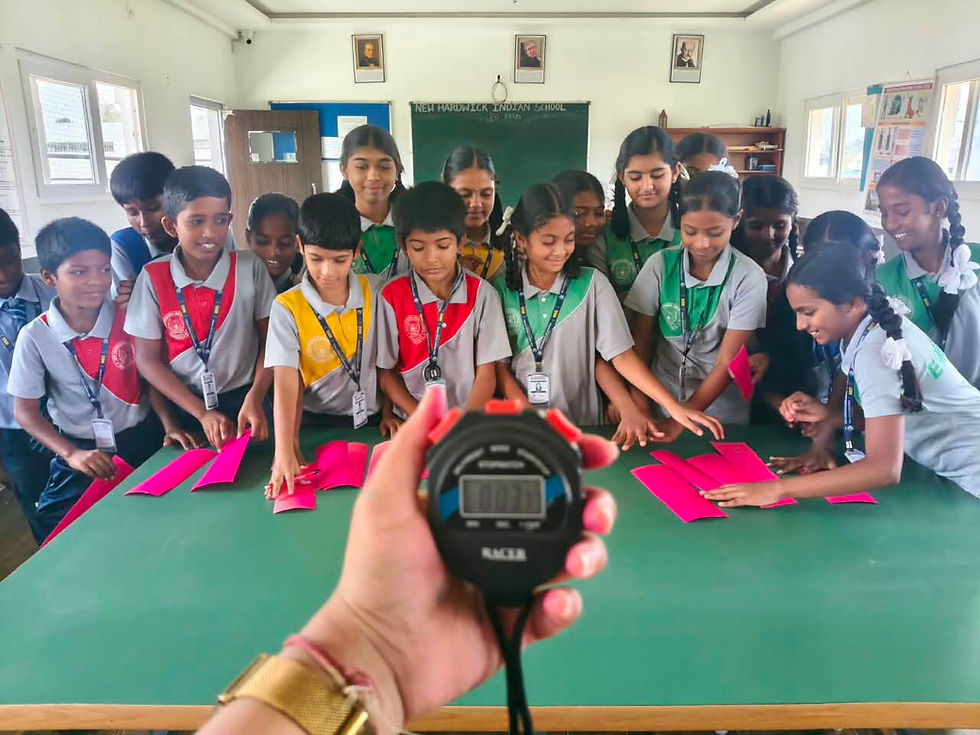
Field visits, cultural programmes, sports, community activities, environmental initiatives, celebrations, competitions, collaborative projects, and experiential learning opportunities give students the chance to apply their knowledge in real-life situations.
These experiences help children understand teamwork, leadership, responsibility, communication, resilience, and respect.
Such learning contributes to the development of holistic education, where academic growth and personal development go hand in hand.
Parents and Schools: Partners in Building Responsible Citizens
Schools alone cannot shape responsible citizens. Parents and families play an equally important role.
When children see adults demonstrating honesty, respect, responsibility, kindness, environmental consciousness, and social awareness at home, these values become part of their everyday lives.
A strong partnership between parents and schools can create a consistent environment where children are encouraged to:
Learn → Understand → Practise → Reflect → Contribute
This approach can help transform values from classroom concepts into lifelong habits.
Why Responsible Citizenship Matters in the Future
The challenges faced by future generations will require more than academic qualifications. Society will need individuals who can collaborate, think critically, solve problems, respect diversity, use technology responsibly, protect the environment, and contribute positively to their communities.
Schools therefore have a long-term responsibility: to prepare children not merely to succeed in life but to make a meaningful difference in the lives of others.
NHIS: Nurturing Learners for Life
At New Hardwick Indian School, Magadi Road, Bengaluru, the journey of education can be viewed as a combination of knowledge, character, creativity, values, and real-world learning.
The purpose of education is not limited to producing high achievers. It is also about nurturing individuals who understand their responsibilities towards their family, community, nation, and planet.
When schools, teachers, parents, and communities work together, children receive the foundation they need to grow into confident, compassionate, ethical, and responsible citizens.
Responsible citizenship begins with small actions and everyday choices. A child who learns to respect others, care for nature, help a friend, follow rules, accept responsibility, and speak with kindness is already developing the qualities needed to contribute positively to society.
NHIS have an important role in nurturing these qualities and helping children become not only successful learners but also responsible citizens and future leaders.
Because the ultimate goal of education is not simply to create knowledgeable individuals—it is to create good human beings who can help build a better world.
NHIS Media Team
NHIS | Magadi Road | Bengaluru


Comments