
Importance of Co-Curricular Activities in a Child's Overall Development

Building Future-Ready Students Beyond the Classroom

Education today extends far beyond textbooks and examinations. While academic excellence forms the foundation of learning, it is the experiences outside the classroom that truly shape confident, responsible, and capable individuals. At New Hardwick Indian School (NHIS), CBSE, Magadi Road, Bengaluru, we believe that every child possesses unique talents waiting to be discovered and nurtured.
Co-curricular activities provide students with opportunities to explore their interests, develop essential life skills, and grow into well-rounded personalities prepared for the challenges of tomorrow.
"Education is not just about making a living; it is about making a life."
At NHIS, this philosophy is reflected in every aspect of our learning environment, where academics and co-curricular excellence go hand in hand.
What are Co-Curricular Activities?
Co-curricular activities are structured educational experiences conducted alongside regular classroom learning. These activities complement academics by encouraging students to apply knowledge in practical situations while developing physical, emotional, social, and creative skills.
Examples include:
Sports and Athletics
Music and Dance
Art and Craft
Debate and Public Speaking
Science Exhibitions
Robotics and STEM Activities
Literary Clubs
Yoga and Meditation
Cultural Programs
Environmental Initiatives
Leadership Programs
Community Service Activities
These activities help students discover their passions and build confidence beyond academics.
Why are Co-Curricular Activities Important?
1. Holistic Personality Development
Every child learns differently. Some excel academically, while others shine in music, sports, leadership, or creativity.
Co-curricular activities help students:
Build confidence
Improve communication skills
Develop leadership qualities
Enhance creativity
Learn teamwork
Improve emotional intelligence
These qualities are essential for success in higher education and future careers.
2. Improves Academic Performance
Research has consistently shown that students actively involved in extracurricular activities often perform better academically.
Participation helps students develop:
Better concentration
Improved memory
Time management
Discipline
Problem-solving skills
When children enjoy learning in different forms, classroom learning becomes more meaningful.
3. Builds Leadership Skills
Leadership cannot simply be taught through books.
Students develop leadership naturally by:
Organizing school events
Leading house activities
Managing club responsibilities
Participating in student councils
Coordinating competitions
These experiences prepare students to become confident decision-makers.
"Every child has talent. Education is the journey of discovering it, nurturing it, and empowering it to shine."
4. Encourages Teamwork and Collaboration
Modern careers require collaboration.
Sports, group projects, drama performances, music bands, and science competitions teach students how to:
Respect different opinions
Work towards common goals
Solve conflicts peacefully
Support one another
Celebrate collective success
These lessons remain valuable throughout life.
5. Promotes Physical Fitness
Healthy children learn better.
Sports and physical education improve:
Physical strength
Coordination
Flexibility
Endurance
Mental well-being
Regular participation also reduces stress and encourages healthy lifestyle habits from a young age.
6. Boosts Creativity and Innovation
Creative thinking is becoming one of the most valuable skills in today's world.
Activities such as:
Drawing
Painting
Theatre
Music
Dance
Robotics
Model-making
allow students to express themselves freely while encouraging innovation and imagination.
7. Enhances Communication Skills
Whether through debates, speeches, storytelling, or stage performances, students become confident communicators.
Strong communication skills help students:
Present ideas clearly
Build confidence
Improve public speaking
Develop listening skills
Express emotions effectively
These abilities are essential in every profession.
8. Develops Emotional Intelligence
Children face various emotional challenges as they grow.
Participation in clubs, competitions, and group activities teaches them:
Patience
Resilience
Empathy
Adaptability
Respect
Self-awareness
These life skills contribute significantly to emotional well-being.
9. Reduces Academic Stress
Continuous academic pressure can become overwhelming.
Co-curricular activities provide a healthy balance by allowing students to:
Relax
Refresh their minds
Stay motivated
Discover hobbies
Build positive friendships
A balanced child is often a happier learner.
10. Prepares Students for Future Careers
Employers today seek individuals with more than academic qualifications.
Skills gained through co-curricular activities include:
Leadership
Critical thinking
Creativity
Collaboration
Communication
Time management
Confidence
These competencies are highly valued in universities and workplaces alike.
Importance of Co-Curricular Activities in a Child's Overall Development
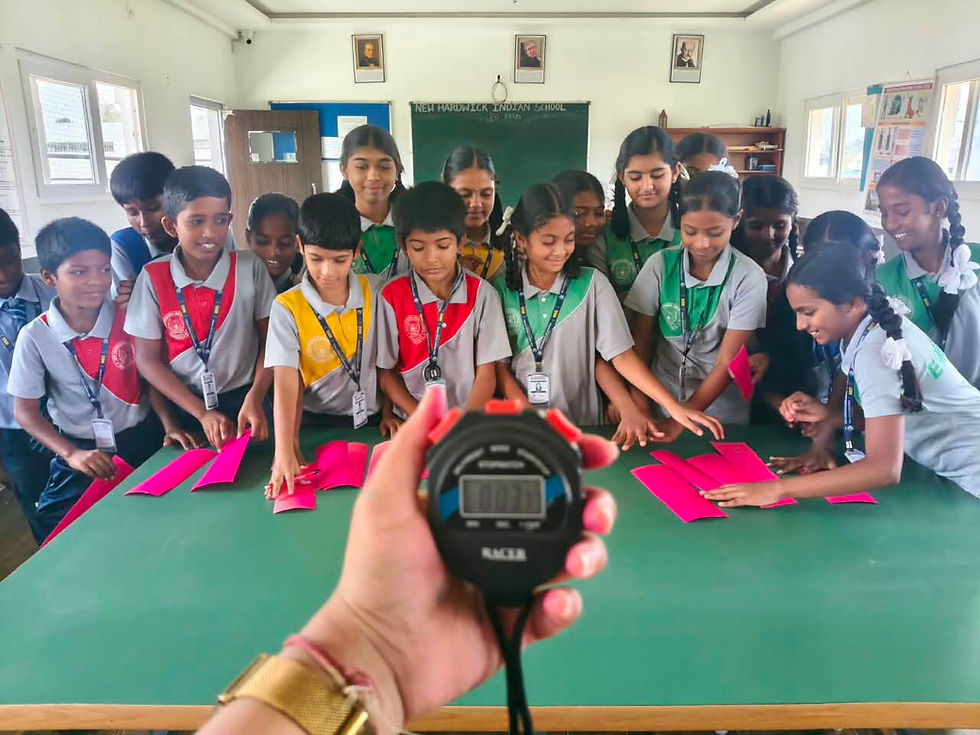
At New Hardwick Indian School (CBSE), Magadi Road, Bengaluru, students receive numerous opportunities to learn beyond textbooks through thoughtfully designed activities.
Our students participate in:
Academic Enrichment
Science Exhibitions
Mathematics Competitions
Quiz Programs
Reading Clubs
Sports & Fitness
Athletics
Indoor Games
Outdoor Sports
Yoga
Physical Education
Creative Arts
Drawing
Painting
Dance
Music
Theatre
Leadership Development
Student Council
House Competitions
Event Management
Public Speaking
Cultural Activities
Annual Day
Festivals
Talent Shows
Cultural Celebrations
Environmental Awareness
Tree Plantation Drives
Cleanliness Campaigns
Eco Club Activities
Sustainability Projects
Every activity is carefully planned to encourage participation, confidence, and holistic development.
Why Parents Should Value Co-Curricular Activities
Parents often focus primarily on academic scores.
However, real success comes from balancing academics with life skills.
Children involved in co-curricular activities generally become:
More confident
Better communicators
Independent thinkers
Emotionally stronger
Responsible citizens
Future leaders
Education is about preparing children for life—not just examinations.
NHIS: Where Learning Goes Beyond the Classroom
At New Hardwick Indian School (CBSE), Magadi Road, Bengaluru, we are committed to nurturing every child's intellectual, emotional, physical, social, and creative growth.
Our holistic approach ensures that students develop into confident individuals who are prepared not only for academic success but also for the opportunities and challenges of the future.
By integrating quality academics with meaningful co-curricular experiences, NHIS empowers students to discover their strengths, pursue their passions, and become responsible global citizens.
Co-curricular activities are no longer optional—they are an essential part of modern education. They cultivate creativity, confidence, discipline, leadership, teamwork, and resilience while enriching academic learning.
At New Hardwick Indian School (CBSE), Magadi Road, Bengaluru, we believe every child deserves an education that inspires excellence both inside and outside the classroom. Through a balanced blend of academics and enriching co-curricular experiences, we prepare our students to thrive in every stage of life.
Poorna Krishnamurthy
Secretary | Academic Excellence Head


Comments